Breaking News: Meta Announces Major Security Upgrades for Encrypted Backups
Meta has unveiled two critical updates to its end-to-end encrypted backup infrastructure, bolstering the security of WhatsApp and Messenger users’ message history. The enhancements—over-the-air fleet key distribution and a commitment to publishing deployment evidence—aim to prevent unauthorized access by Meta, cloud providers, or any third party.
“These updates close potential gaps in key verification and provide independent cryptographic proof that Meta cannot access user backups,” said Dr. Elena Martinez, a cryptography researcher at MIT. The changes build on Meta’s existing HSM-based Backup Key Vault, introduced last year.
Background: The HSM-Based Backup Key Vault
Meta’s Backup Key Vault uses tamper-resistant hardware security modules (HSMs) to store recovery codes for encrypted backups. The system is deployed across multiple datacenters with majority-consensus replication, ensuring resilience even if some HSMs fail.
Users protect their message history with a recovery code that the HSMs store—Meta cannot access it. Previously, WhatsApp hardcoded fleet public keys into the app, while Messenger required app updates for new HSM fleets. The new updates address these limitations.
Over-the-Air Fleet Key Distribution for Messenger
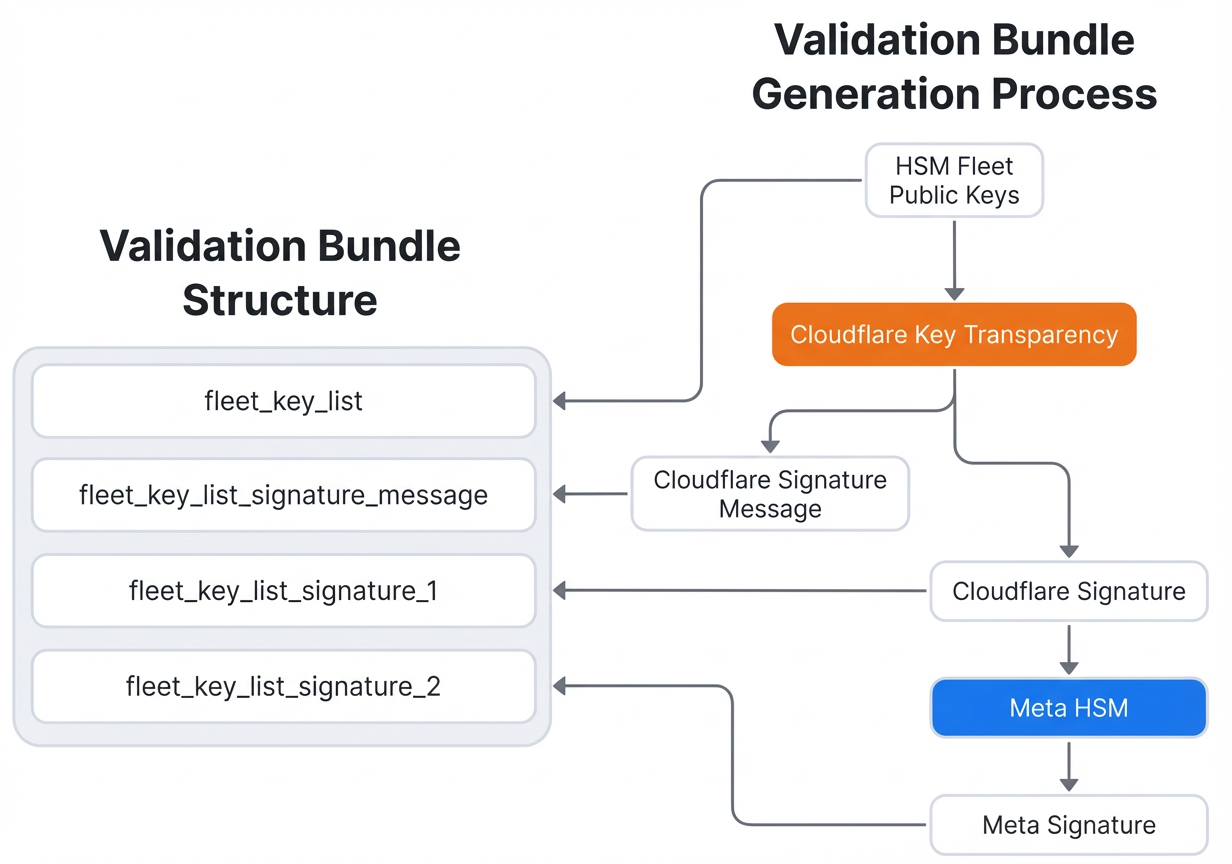
To support Messenger without requiring app updates, Meta now distributes fleet public keys over the air as part of the HSM response. The keys arrive in a validation bundle signed by Cloudflare and counter-signed by Meta, providing independent cryptographic proof of authenticity.
“Cloudflare also maintains an audit log of every validation bundle, adding an extra layer of transparency,” Martinez noted. The full protocol is detailed in Meta’s whitepaper, Security of End-To-End Encrypted Backups.
Transparency in Fleet Deployment
Meta has pledged to publish evidence of each new HSM fleet’s secure deployment on its engineering blog. While new fleets are deployed infrequently—typically every few years—the company says users can verify deployment security by following audit steps in the whitepaper.
“We are committed to demonstrating to our users that each new fleet is deployed securely,” a Meta spokesperson told reporters. The transparency push aims to cement Meta’s leadership in secure encrypted backups.
What This Means for Users
These updates mean that even if Meta were compelled by a government or breached by an attacker, it could not decrypt users’ backup data. The over-the-air key distribution eliminates the need for app updates, reducing the risk of outdated cryptographic keys.
“This is a significant step forward for privacy at scale,” Martinez said. “It sets a new standard for how large platforms should handle encrypted backups—with verifiable, tamper-proof infrastructure.” Users of both WhatsApp and Messenger will benefit from these changes without any action required.